
A Just Transition Away from Fossil Fuels: Advancing Climate Justice, Energy Sovereignty and 100% Renewable Energy in Southeast Asia
Our Shared Position
We, members of parliament from Southeast Asia, share a common concern: our region cannot afford to remain dependent on expensive, imported, risky fossil fuels. At the same time, the climate crisis deepens, threatening the lives and livelihoods of our people. We call for a rapid, equitable, and just transition away from coal, oil, and gas towards 100% renewable energy systems that put people and the planet first.
Across Southeast Asia, communities are already living with the consequences of a boiling world. Extreme weather, rising seas, floods, and droughts threaten food security and put lives and livelihoods at risk. At the same time, geopolitical tensions in West Asia and disruptions to energy supplies through the Strait of Hormuz have exposed our economies’ vulnerability to imported fossil fuels. When oil and gas prices rise, the impacts reach far beyond energy markets. Our communities struggle to meet daily expenses, businesses face higher costs, and governments are pressured to spend public money responding to a crisis they did little to create.
These experiences make one thing clear: we cannot achieve lasting energy security, climate resilience, economic prosperity, and a safe planet by remaining dependent on fossil fuels.
Southeast Asia can produce its own energy. The region has enormous potential for solar and wind power, as well as room to improve energy efficiency, grid connectivity, and battery storage. With the right investments, infrastructure, and policies, these resources can help meet the region’s energy needs while making electricity more accessible and affordable, creating new jobs, and strengthening local economies. The challenge is no longer whether we have the resources to make the transition, but whether governments and financial institutions will make it happen at the speed and scale required.
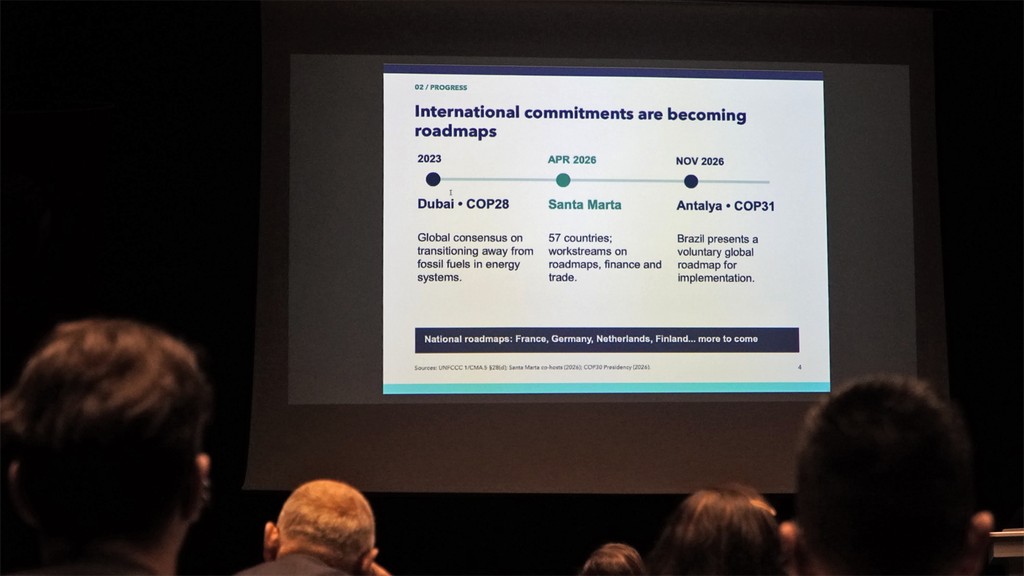
As representatives in Southeast Asia, we reaffirm our commitment to climate justice, the principle of common but differentiated responsibilities and respective capabilities, and a just transition that leaves no worker, community, or country behind. We welcome the growing international effort to advance cooperation on transitioning away from fossil fuels, including the First International Conference on Transitioning Away from Fossil Fuels held in Santa Marta, Colombia, in April 2026. These efforts should reinforce the Paris Agreement and the broader UN climate process, while delivering concrete action for people on the ground.
Japan’s Role: Reevaluating AZEC and POWERR Asia
Japan has a longstanding economic relationship with Southeast Asia, and we recognize the important contribution that its technologies, investments, and regional cooperation can make to our energy future. Japan’s Asia Zero Emission Community (AZEC) could help accelerate the transition to clean energy if it fits Southeast Asia’s needs. But we must consider its contribution by what it delivers in practice: lower emissions, independence from fossil fuels, and tangible benefits for the people of the region.
We are deeply concerned that AZEC cooperation so far continues to promote liquefied natural gas (LNG) and other fossil-fuel-related technologies, including ammonia co-firing, hydrogen produced from fossil fuels and carbon capture, utilization and storage (CCUS). These technologies extend the use of coal and gas, create new fossil fuel dependencies, and divert investment from renewable energy. They risk delaying the transition we urgently need while locking in our reliance on fossil fuels for decades.
We also recognize the immediate pressures governments face during an energy crisis. Japan’s Partnership on Wide Energy and Resources Resilience Asia (POWERR Asia), announced in April 2026 with approximately US$10 billion in financial cooperation, was presented as a response to energy supply disruptions. Japan furthered the region’s commitment to fossil fuels with an oil stockpiling program announced during the AZEC Ministerial Meeting in October 2026. Emergency assistance is important, but it should not deepen our reliance on imported oil and gas through new infrastructure and long-term debt.
The current crisis should be a turning point. It would be a mistake to respond to fossil fuel insecurity by investing in programs, agreements, and infrastructure that lock our countries into the same dependence for decades. Public funds and international cooperation should instead support countries to transition to renewable energy, strengthen electricity grids, improve energy efficiency, and provide affordable, reliable power to all.
We call on the Japanese government, its public financial institutions—including the Japan Bank for International Cooperation (JBIC), Japan International Cooperation Agency (JICA) and Nippon Export and Investment Insurance (NEXI)—as well as Japanese commercial banks and corporations, to ensure that their policies, investments and financing in Southeast Asia and beyond support a genuine transition away from fossil fuels. Japan can be a constructive partner in Southeast Asia’s energy future, but that partnership must be consistent with climate science, the Paris Agreement and the needs and aspirations of our peoples.
What We Call For
1. A clear and time-bound rapid, equitable and just transition away from fossil fuels
We call on ASEAN governments to establish clear and equitable pathways to phase out coal, oil and gas, stop the expansion of fossil fuel infrastructure, and rapidly scale up renewable energy. These pathways should be consistent to limit global warming to 1.5°C, take account of different national circumstances and responsibilities, and include concrete timelines for retiring fossil fuel facilities while protecting workers and affected communities.
LNG and gas should not be treated as an inevitable or indefinite transition fuel. New projects can create long-term financial obligations, costly take-or-pay contracts, and stranded assets. Governments must also begin phasing out fossil fuel subsidies and other public support that prolongs dependence, while ensuring that the costs of change do not fall on low-income households and vulnerable communities.
2. Redirect AZEC, POWERR Asia and public finance towards renewable energy
We urge Japan to make renewable energy and energy independence central to AZEC and POWERR Asia. Cooperation should prioritize solar and wind power, battery storage, modern smart grids, energy efficiency, and electrification.
Public finance should support projects that demonstrably reduce fossil fuel dependence and greenhouse gas emissions. Governments and financial institutions must be transparent about the projects they support, the financing terms, and the expected climate benefits. The transition should not deepen debt burdens, and should prioritize grants and highly concessional finance where appropriate, particularly for vulnerable countries and communities.
3. Put people and communities at the heart of energy decisions
Energy must be treated as an essential public good, not simply a commodity for private profit. Communities must have a meaningful say in decisions that affect their land, livelihoods and access to energy. Renewable energy projects must respect Indigenous Peoples’ rights, including free, prior and informed consent where applicable, as well as land rights, biodiversity, food security and local livelihoods.
We call on ASEAN governments to support community-owned and cooperative renewable energy, public investment and decentralized energy systems. Everyone should have access to affordable, clean, safe and reliable electricity. A transition that replaces fossil fuel dependence with concentrated ownership, displacement or unequal access will not deliver the energy democracy and justice our region needs.
4. Protect workers and communities through a just transition
Moving away from fossil fuels must go hand in hand with decent work, social protection, and economic security. Workers and communities whose livelihoods depend on fossil fuel industries must not be abandoned. Governments should develop just transition plans with workers, trade unions, Indigenous Peoples, women, young people, and affected communities, including provisions for retraining, income support, alternative livelihoods, and investment in local economies.
The burden of the transition must not fall on those who have contributed least to the climate crisis. Fossil fuel companies and those who have profited from extraction and consumption must bear their fair share of the costs.
5. Strengthen ASEAN cooperation and accountability
We call on ASEAN governments to align AZEC and other international energy partnerships with the ASEAN Plan of Action for Energy Cooperation (APAEC) 2026–2030 and the ASEAN Renewable Energy Long-term Roadmap. Regional cooperation should accelerate renewable energy deployment, modernize electricity grids, improve energy efficiency, and facilitate technology transfer.
As parliamentarians, we commit to working together to advance legislation, scrutinize public budgets and financing, and hold governments and financial institutions accountable for their energy decisions. We will push to dismantle fossil fuel subsidies, greater transparency in public guarantees, energy contracts, and the environmental and social impacts of energy projects.
We will also work with communities, civil society organizations and independent experts to advance People’s Energy Transition Roadmaps that reflect the needs, circumstances and aspirations of our countries. These roadmaps should help translate the call for a just transition into practical policies, targets, financing priorities and actions that people can monitor and for which people can hold decision-makers accountable.
6. Carry Southeast Asia’s call for climate justice to the ASEAN Summit and COP31
We call on ASEAN leaders, under the Philippines’ 2026 chairship, to make a just transition away from fossil fuels a priority in regional energy and climate cooperation. We urge Japan to demonstrate climate leadership by redirecting public and private finance towards renewable energy, storage, grids, efficiency and electrification, and by ensuring that AZEC and POWERR Asia contribute to this transition away from fossil fuels rather than delay it.
Ahead of COP31 in Türkiye, we call on governments to strengthen international cooperation on phasing out fossil fuels, delivering climate finance, transferring technology and supporting developing countries. Developed countries must meet their climate finance obligations and provide adequate grant-based and concessional support. Climate action must not become another source of unsustainable debt for the Global South.
We also encourage ASEAN member states to engage constructively in the international process initiated in Santa Marta and to support practical, equitable pathways for moving away from fossil fuels, with the voices and interests of developing countries and affected communities fully represented.
Our Commitment
We believe Southeast Asia can secure a better future for its people while addressing the climate crisis. But this will require political courage, public accountability and a willingness to move beyond the energy choices that have left our countries exposed to international price shocks and our communities vulnerable to climate impacts.
A just transition is about more than replacing one technology with another. It is about who controls energy, who benefits from it, who pays for it, and whose voices are heard. It must deliver affordable electricity, decent work, healthier communities and a safe climate for present and future generations.
We commit to strengthening cooperation across Southeast Asia, bringing the concerns of our peoples into national and regional decision-making, and holding governments and financial institutions accountable for the commitments they make.
Southeast Asia deserves an energy future built on climate justice, energy sovereignty and 100% renewable energy—not renewed dependence on fossil fuels.
SIGNATORIES
Hon. Cielo Krisel Lagman – Philippines
Hon. Robert Nazal – Philippines
Hon. Mercy Barends – Indonesia
Hon. Lidia Norberta Dos Santos Martins – Timor Leste
Hon. Lee Chean Chung – Malaysia (former MP)
Hon. Renee Co – Philippines
Hon. Supachot Chaiyasat – Thailand
Endorsed by:
Hon. Rosa Galvez – Canada
Hon. Laura Ballesteros – México
Hon. Rebecca Yei Kamara- Sierra Leone
Hon. Lawrence Songa – Uganda (former MP)
Hon. Anthony Kasandwe – Zambia (former MP)